
Labradorite is primarily associated with the element of Air, evident through its light-reflective properties and connections to mental clarity in traditional symbolism. This mineral's distinctive play-of-color effect occurs from optical interference within its structure, linking it scientifically to atmospheric phenomena.
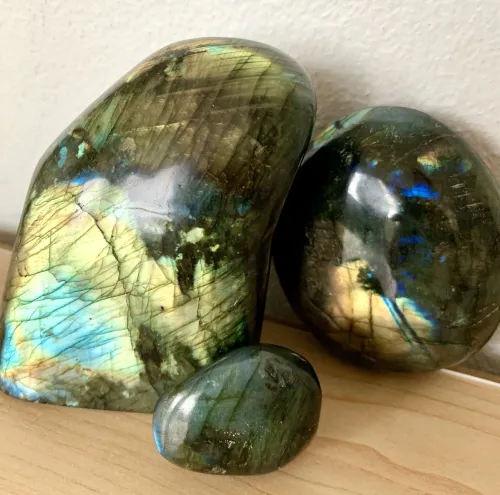
Picture yourself browsing a gemstone market when vibrant blue flashes catch your eye from an otherwise ordinary grey rock – that's labradorite. Suddenly you wonder why this stone feels distinctly different from others beside it. With so much conflicting information about crystal symbolism, it's easy to feel overwhelmed. That's why we've organized key aspects of labradorite into a practical checklist approach: Rather than sifting through volumes of lore, you'll get actionable reference points to clearly understand its elemental connections through tangible characteristics.
Essential Labradorite Elements to Remember
- Element Anchor - Air connection: The flashing optical effects physically demonstrate atmospheric qualities.
- Signature Visual Marker: Distinct labradorescence appears as surface flashes when light interacts with internal layers.
- Physical Structure Details: Complex mineral composition creates unique interference patterns.
- Practical Handling Factors: Moderate hardness requires care against knocks or pressure points.
- Cultural Symbolism Patterns: Consistent cross-cultural associations with sky/air attributes.
Check 1: Understanding the Core Elemental Association
When determining elemental connections, focus on how a stone’s physical properties align with symbolic interpretations. With labradorite, its most consistent elemental association becomes apparent once you recognize how its scientific properties mirror characteristics of air: ever-changing light displays like shifting winds, translucent layers recalling atmospheric layers, and flashes resembling sunlight through clouds.
Air Relationship Fundamentals
The Air element connection stems from observable play-of-color - flashes appear then vanish as you rotate the stone, similar to sunlight changing during passing clouds. This results from complex lamellar intergrowths creating structural color effects as light refracts through microscopically thin layers. Such dynamic visual changes may evoke qualities often symbolically linked to Air: transformation, mental agility and intellectual concepts.
Physical Expression of Elemental Traits
Notice how temperature conductivity supports the Air connection: Place labradorite against your skin and you may register moderate coolness during contact, which can parallel qualities attributed to air movement in symbolic traditions. Similarly, the stone's moderate surface hardness (6-6.5 on Mohs scale) necessitates careful handling to avoid cleavage fractures - a tangible reminder of its physical nature beyond abstract symbolism.
Check 2: Recognizing Physical Manifestations
Beyond symbolic meanings, labradorite’s elemental association shows through verifiable physical properties. These provide concrete reference points when encountering the stone in real-world situations like jewelry shops or museum displays.
Light Interaction Patterns
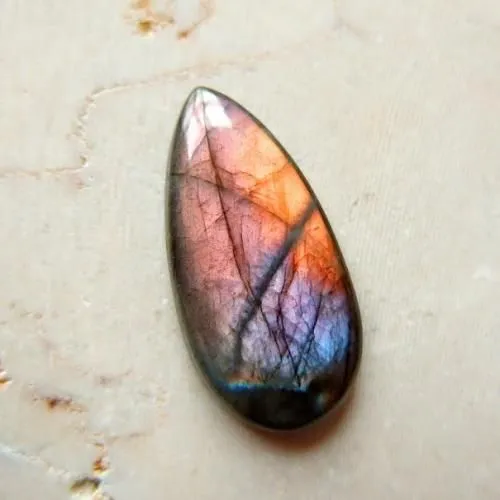
The most definitive marker is labradorescence - colorful flashes created when light enters and reflects between internal mineral layers. Iridescent displays often show blue-green wavelengths due to light interference within internal layers. Three concrete features reveal this phenomenon:
- Angle-sensitive displays: Color flashes appear and disappear when you rotate the specimen, proving they're optical rather than pigmentation
- Layer visibility: Under magnification, you can see striped formations where different minerals meet
- Polish impact: Surface finish quality directly affects flash intensity and depth perception
Material Composition Factors
Labradorite's behavior arises from its fundamental structure rather than external environmental factors. Unique patterns appear differently based on viewing angle due to fixed crystalline architecture. Visible traits may vary depending on geological formation conditions but fundamentally remain optical interference phenomena. For practical identification: Tumbled versus raw forms exhibit different tactile experiences regarding texture smoothness, yet both demonstrate the signature labradorescence when angled toward light sources.
Check 3: Engaging with Elemental Connections
Air's symbolic qualities often involve mental processes and environmental responsiveness. Practical activation relates directly to labradorite's physical properties.
Observation Techniques
Situational awareness offers the most accessible approach. Imagine unfolding your latest crystal order: Before storing the stone, inspect it under different lighting. Kitchen fluorescents may reveal different color patterns than sunlight streaming through windows. Sensory feedback during examination may include subtle shifts in visual patterns as daylight changes throughout hours.
Daily Context Connections
Carry a small specimen in your bag and occasionally observe how reflections shift between office lighting and outdoor settings. This practical noticing demonstrates the stone's responsive nature to environmental light conditions - qualities that historically evoked connections with air and atmospheric changes. Environmentally, labradorite exhibits sufficient resilience for indoor/outdoor placement within moderate weather exposure limits, reflecting adaptability commonly attributed to air elements.
Check 4: Symbolic Frameworks and Combinations
Cultural interpretations of labradorite consistently reference Air symbolism across geological and jewelry contexts.
Cross-Cultural Associations
In various traditions, labradorite's transformation associations connect appearance changes to universal concepts of metamorphosis. Symbolic representation systems consistently reference sky motifs - Inuit legends describe captured northern lights in labradorite, Nordic traditions associated flashes with changing seasons. Even contemporary jewelers leverage its shifting colors for "mood-responsive" designs.
Compatible Pairings
Material compatibility appears suitable for pairing with complementary vibration-frequency minerals that exhibit contrasting or harmonizing properties. For example:
- With smoky quartz: Creates visual conversation between transparency and reflections
- Paired with carnelian: Warm orange surfaces make blue flashes appear more vibrant
- Set in silver: Cool metal tones enhance its chromatic intensity
Three Priority Insights to Remember
Next time you encounter labradorite, pause to recall these core observations: Its Air association primarily manifests through shifting optical effects (labradorescence), not fixed colors; angle-dependent flashes result from measurable mineral layering; its moderate hardness means practical care prevents fracture lines. Keep these physical anchors in mind whether you’re browsing stores, handling personal specimens, or discussing its properties. What particular features would you observe more carefully knowing this context?
Questions About Elemental Associations Clarified
Q: Do different labradorite colors connect to specific elements? Color spectrum variations occur naturally depending on geological conditions, but scientific analysis shows labradorescence typically involves the same light-interaction mechanisms regardless of hue.
Q: Are some labradorite types more strongly "air-associated"? Spectrolite displays more dramatic flashes due to formation conditions, visually emphasizing air-like qualities – but the underlying physics remain consistent across quality variations.
Q: Does stone size affect elemental connections? Size variations may influence light dispersion, with larger specimens potentially showing more complex patterns – yet optical principles don't change regardless of scale.
Q: How does maintenance relate to elemental properties? Gentle cleaning preserves surface integrity that enables light play – scratches or residue can diminish labradorescence visibility.

