Labradorite is a plagioclase feldspar mineral with unique iridescent properties scientifically explained by light diffraction in its layered structure, differing significantly from folkloric associations suggesting mystical powers or supernatural origins.
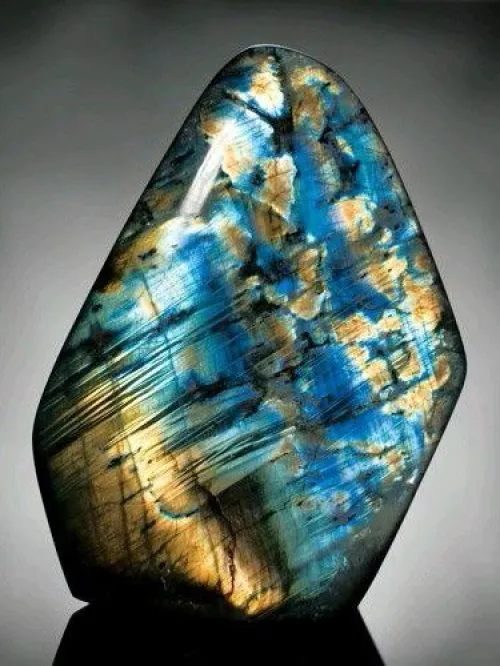
Picture this: You're browsing a gem show, captivated by a display of stones flashing peacock blue. The vendor leans in conspiratorially: "This labradorite connects you to ancient magic." Later, at a geology exhibit, you see a nearly identical specimen described as "a textbook example of light interference." This clash between poetic storytelling and observable reality isn't just confusing—it obscures fascinating truths. That moment of uncertainty? That's why you need this reality checklist. We'll unpack what actually matters when distinguishing scientific properties from enchanting tales, turning disjointed folklore into clear geological literacy using straightforward checks any jewelry shopper or geology enthusiast can apply. Forget mystical jargon; we're focusing on touchable, measurable characteristics that let you decode labradorite intelligently.
Imagine examining necklace beads at a craft fair. The seller points to swirling blues: "This crystal channels cosmic energy." But pause—before considering symbolic meanings, establish basic classification. This step clarifies why mislabeling breeds confusion, letting sellers invent properties rather than ground descriptions in mineralogical reality.
Labradorite forms through precise geological processes, not mystical creation. Its core composition consistently measures (Ca,Na)(Al,Si)4O8—a chemistry predictable within igneous formations. This triclinic crystalline structure creates signature 86º and 94º cleavage planes. When examining specimens in shops or museum displays, notice how breaks often align with geometrical perfection rather than random cracking. Specific gravity consistently registers 2.69-2.72 through gemological testing, a reliable ID marker when differentiating from similar iridescent minerals. Understanding these measurable traits helps you evaluate whether sellers promote physical characteristics or unverifiable stories.
Consider a pendant sold as "rare moonstone." Structural analysis reveals critical distinctions: While both feldspars, parallel lamellae in labradorite measure precisely 50-100 nanometers thick—explaining its intense iridescent flashes absent in moonstone. Notice how this structural reality impacts cutting practices during production. Lapidarists specifically orient facets perpendicular to layering to maximize visual effect. Comparing this standardized approach with vague descriptors like "energy alignment" helps consumers recognize when technical precision exists versus poetic license. Cross-sectional microscopic views consistently reveal aligned layers responsible for those captivating color bursts—patterns observable rather than imagined.
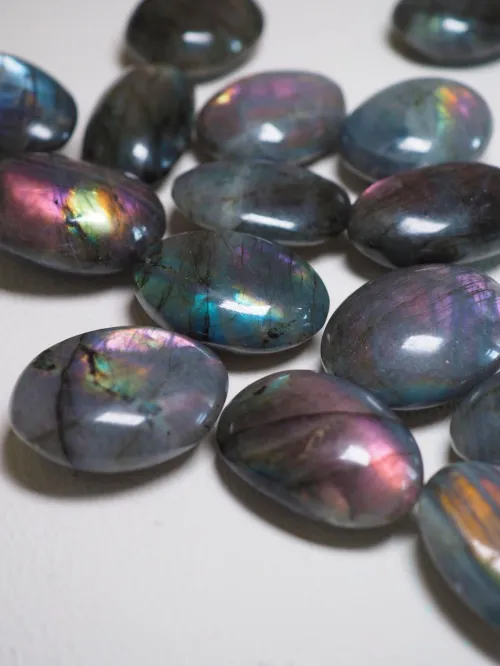
Recall observing that brooch changing from gray to electric blue when tilted. Your friend whispers: "The stone's aura reacts to energy shifts!" But here's what's happening structurally: Light separates across sub-microscopic layers, revealing how physics creates wonder. This understanding transforms random observation into critical evaluation of authenticity claims.
The phenomenon called labradorescence occurs through diffraction physics, not surface reflections. When viewing under shop lights or sunlight:
When considering two seemingly identical specimens—say in an online auction—apply these diagnostic checks to distinguish natural formation from synthetic manipulations:
Imagine your labradorite ring surviving three years of daily knocks against keyboards. The jeweler who sized it never mentioned "protective energies"—instead they discussed setting security and Mohs hardness. Focusing on physical resilience shifts conversation from abstract claims to concrete longevity factors.
With hardness between 6-6.5, labradorite requires thoughtful setting in rings or bracelets. Practical examples:
You hear a vendor telling customers: "Inuit legends say labradorite contains frozen northern lights." While beautifully poetic, ethnographic research reveals deeper nuance. Understanding authentic cultural histories respects Indigenous knowledge while identifying modern embellishments.
Pre-colonial Inuit traditions did associate labradorite with northern landscapes, yet modern attribution of specific powers (e.g., "energy shielding") emerged recently. Scientific analysis helps contextualize:
Next time you encounter labradorite in galleries or online stores, mentally note these evidence-based anchors:
Q: Are darker labradorites more powerful than lighter specimens?
A: Color saturation correlates with layered regularity within the mineral structure, not energy levels. Valuations reflect pattern contrast and diffraction quality—attributes measurable through optical instruments.
Q: Do labradorites require special cleansing rituals?
A: Surface cleansing involves gentle methods advised for moderately hard minerals. Structural stability permits standard cleaning; ultrasonic methods may be used cautiously but temperatures should remain below 400°C to prevent microfractures.
Q: Can labradorite change color permanently due to emotional connection?
A: Chromatic properties remain constant under normal wear conditions. Laboratory UV testing confirms color stability across thousands of exposure hours, with changes occurring only from physical damage or extreme environmental factors.


$
