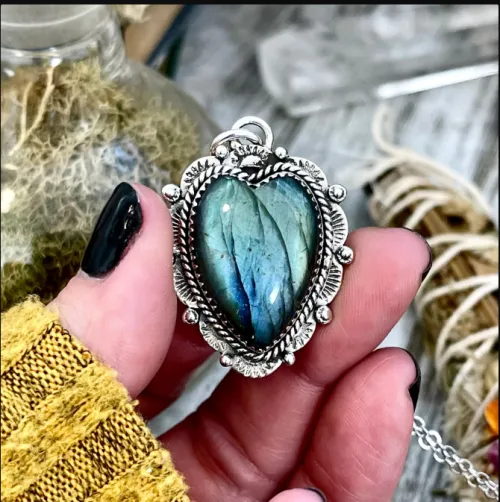
Picture yourself browsing a gem show aisle when two stones catch your eye – one flashes rainbow colors as you rotate it, while the other glows with a mysterious blue-white sheen. The vendor identifies both as feldspar minerals, leaving you wondering why they look so distinct. This guide cuts through the confusion with a field researcher’s checklist approach, breaking down complex mineralogy into observable traits you’ll recognize during real-world encounters like jewelry shopping, gem hunting, or comparing stones with fellow enthusiasts.
This section helps you interpret what your eyes actually see when handling specimens. Recognizing these visual clues prevents misidentification when stones share similar base colors or when lighting conditions change.
The specific angle of light refraction reveals why labradorite throws fireworks-like color bursts across its surface – turn it 30 degrees, and those blues vanish like a switch flipped. Meanwhile, moonstone's adularescence appears to move beneath the surface when tilted, resembling moonlight on water because layered structures scatter rather than refract light. Artificial lighting may intensify moonstone's glow but can make labradorite look flat compared to natural daylight.
Picture cutting open two surprise geodes: one reveals charcoal-gray rock suddenly igniting with metallic blues and greens when shifted (labradorite’s signature), while the other contains a milky stone with wispy blue light seeming to float within (classic moonstone). While some moonstones may display peach or gray undertones, they rarely achieve labradorite's intense electric flashes. Surface textures also vary – moonstone tends toward smooth translucence whereas labradorite often shows striated patterns reflecting its layered formation.
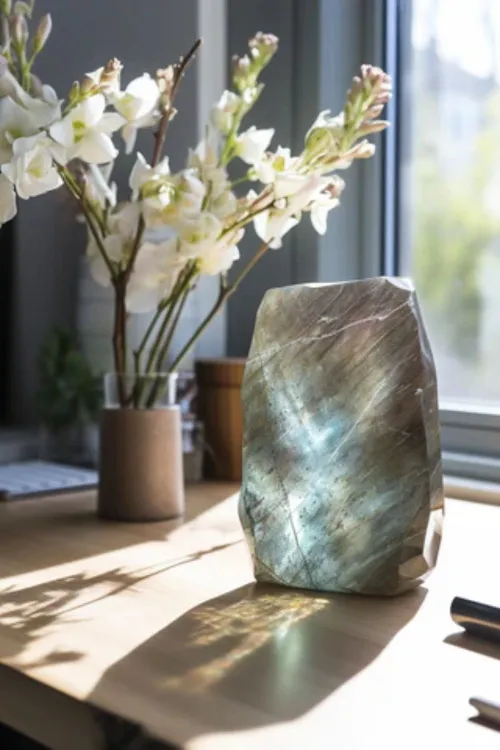
Understanding formation processes explains surface appearances and helps evaluate why specimens vary even within the same mineral type. These factors matter when sourcing authentic materials or predicting durability.
A friend once described finding moonstone in Himalayan riverbeds – formed when potassium-rich magma cooled slowly, allowing layered structures to develop underground. Meanwhile, labradorite typically forms in igneous environments like Canadian bedrock where calcium-rich minerals cooled rapidly, creating compressed layers that fracture light differently. These distinct origins explain why moonstone resists thermal shock better than labradorite during cleaning.
Try this: if both minerals are stacks of playing cards, moonstone's layers lie perfectly parallel like a new deck, creating its signature glow. But labradorite's layers look like a shuffled deck with cards tilted at varying angles, producing those explosive color flashes. These crystalline lattice differences account for labradorite's higher tendency toward visible cleavage lines – a crucial factor when cabochon cutters select stones.
When choosing stones for daily wear or decorative pieces, subtle structural differences become important. This section translates mineral properties into real-world usage tips.
Imagine your favorite ring takes daily knocks against keyboards – labradorite's slightly higher hardness (6-6.5 vs. moonstone's 6) may better withstand abrasion, but its cleavage planes pose a risk of chipping during impact. For sculptors, moonstone's uniform texture allows more precise carving, while labradorite's unpredictable fracture patterns challenge intricate work. Jewelry setters often choose protective bezels for both since their cleavage can complicate prong repairs.
Picture a gemologist's toolkit: refractometers measure labradorite's higher refractive index while spectroscopes detect characteristic absorption patterns. These tests prove invaluable when unusual specimens surface – perhaps a gray stone with faint flashes could be mislabeled moonstone instead of low-grade labradorite. Pricing typically correlates with intensity of optical effects rather than size alone, with both minerals demonstrating regional rarity influencing value.
Consider this field note summary before your next encounter: First, observe how light interacts—does the stone project colored flashes (labradorite) or emit internal glow (moonstone)? Next, check the base tone; deep grays to blacks suggest labradorite, while whites to peaches lean toward moonstone. Finally, examine under magnification for labradorite's layered striations or moonstone’s directional sheen.
What causes the color differences within the same mineral family?
Slight variations in elemental composition during formation account for distinct light interactions – sodium-calcium blends create labradorite's interference patterns while potassium dominance yields moonstone's scattering effect.
Can both minerals display similar colors?
While some labradorites show blue flashes reminiscent of moonstone's glow, the mechanics differ: refracted beams versus scattered light. Under direct comparison, labradorite's colors appear crisper and more directional.
How should wearers maintain pieces with these stones?
Gentle cleaning avoids thermal or chemical stress; avoid ultrasonic cleaners due to potential cleavage plane weaknesses. Storage in fabric-lined containers prevents surface abrasion.


$
