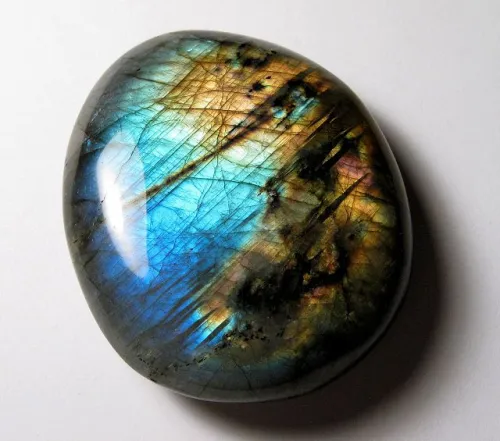
When selecting personality-aligned pieces, consider how the recipient interacts with accessories daily. Whether it's a carefully curated collection or occasional statement pieces, these fundamentals create meaningful connections between stone and wearer.
Imagine your friend Alex whose minimalist fashion sense contrasts with their vibrant social presence. Labradorite's hidden color bursts perfectly suit such contrasts.
For those who gravitate toward bold statements, consider larger stones showing dramatic iridescent flashes. Picture this: A pendant that appears deep gray until sudden movement reveals electric blues and greens. Technical details matter here - light angles during cutting create maximum iridescent visibility. Yet shallow crown angles may require bezel edges to prevent chipping along cleavage planes.
Quiet personalities often shine through thoughtful details. A friend might consistently choose accessories that whisper rather than shout. Here, smaller labradorite pieces may carry discreet flashes activated only in indirect light. Notice pebble-textured backgrounds that enhance optical effects through contrast without overwhelming. Matte finishes work well too, reducing fingerprint visibility on frequently touched surfaces.
A coworker once complimented your necklace but confessed she avoids jewelry due to discomfort. Physical interaction with accessories often determines their permanence in someone's life.
Curved ergonomic forms tend to feel more comfortable against skin during movement. Imagine giving jewelry to someone constantly on-the-go. Technical solutions exist - elevated basket settings prevent surface abrasion, while secure dual-spring clasps minimize accidental openings. For rings, post-purchase resizing capabilities may accommodate natural finger fluctuations.
Consider tactile preferences for frequent wearers. Hypoallergenic metals can reduce skin sensitivity risks, while textured surfaces create pleasant tactile feedback. Weight distribution significantly impacts comfort - lighter pendants around the neck or well-balanced earring backs make extended wear possible.

Recall seeing someone light up when recognizing the significance of their gift. Personal connections transform jewelry from accessory to keepsake.
Technical customization options include modular clasps allowing chain adjustments for varied necklines. Pavé settings cluster miniature stones to create personalized patterns of light reflection. These small adjustments make pieces feel inherently "theirs" rather than generic.
Picture someone treasuring a gift for decades. Their maintenance approach matters - while rhodium plating adds tarnish resistance, it requires specific cleaning protocols. Ultrasonic cleaners may exceed hazard thresholds for untreated stones at 6.5–7.1 on the Mohs scale.
When choosing labradorite jewelry next time, use this condensed roadmap to match pieces with personalities:
Q: Can delicate labradorite withstand regular use?
A: With protective settings shielding cleavage lines and hardness above window glass, quality pieces can maintain integrity with proper care. Avoiding impacts remains important.
Q: How might lighting affect labradorite's appearance?
A: Color flashes may show more intensely under daylight versus artificial lighting. Movement and angle changes reveal different iridescent patterns depending on initial cutting precision.
Q: Are certain personalities better suited to specific settings?
A: Bold personalities might prefer prominent settings showing maximum stone surface, while reserved individuals may connect better with partial bezel designs that frame rather than overwhelm the mineral.


$
