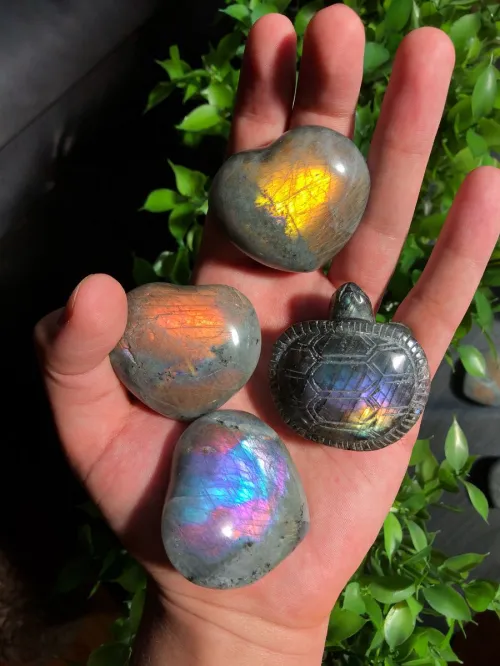
You’re browsing a jewelry store display when a pendant catches your eye—flashes of electric blue dance through its surface like captured lightning. "That's labradorite," the salesperson mentions casually. Later, scrolling online listings, you encounter wildly varying descriptions: "natural rainbow moonstone," "lab-grown spectral stone," "authentic labradorite." This confusion isn't uncommon. Labradorite's magic lies precisely in its geological origins, yet modern technology enables convincing replicas. To navigate this without getting overwhelmed, we’ve distilled the essentials into key focus areas. Consider these sections as your structured field notes, turning complex mineralogy into practical observation points you can use anywhere—from artisan markets to online galleries—to appreciate what unfolds beneath the surface.
Before examining visual details, establish this foundational understanding. Why does the natural/man-made distinction matter? Because geological labradorite possesses structural complexities that synthetic alternatives rarely replicate fully, impacting both aesthetic experience and long-term durability. This knowledge helps avoid mismatched expectations when selecting pieces.
Natural labradorite develops when molten rock undergoes specific cooling conditions. Picture magma bubbling deep underground like a simmering pot of mineral soup. As ingredients separate during slow cooling over centuries, distinctive parallel layers form, creating microscopic structures that eventually generate its famous flashes. This igneous rock formation process occurs worldwide in locations like Labrador, Canada—its namesake—and Madagascar. Temperature variations and mineral interactions during crystallization create the layered interior that gives labradorite its unique identity.
Synthetic versions often utilize glass composites or lab-grown crystals designed to visually approximate natural stones. Imagine technicians heating silica mixtures with metallic additives in furnace-like environments—controlled conditions differing dramatically from random geological forces. While some imitations may initially look convincing, their internal architecture usually shows ordered uniformity unlike the natural stone's irregular patterns. The technical_features indicate synthetic materials often differ significantly in thermal conductivity and color stability under ultraviolet exposure.
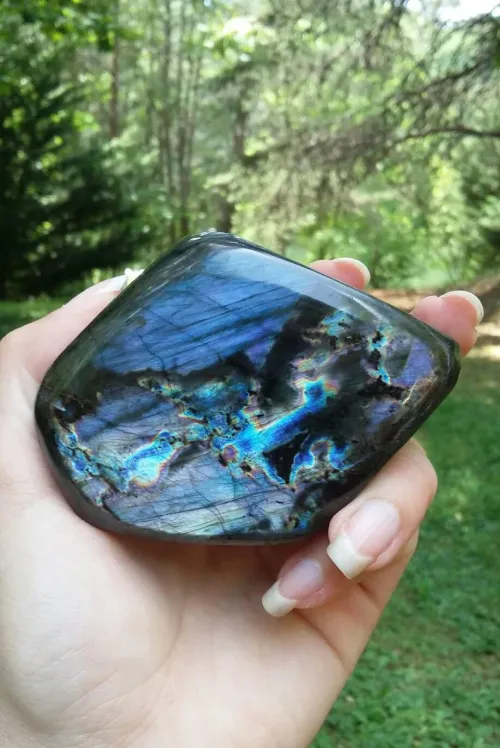
Once you understand origin stories, focus on tangible characteristics that set genuine pieces apart. Since synthetic techniques constantly evolve, prioritize observing how light behaves within the material rather than relying solely on surface appearance. This hands-on approach serves you equally well under boutique spotlights or when examining product photographs.
Labradorescence—that mesmerizing play of spectral colors—occurs when light enters the stone's layered structure and reflects between microscopic interfaces. Think of sunlight hitting overlapping sheets of colored glass at shifting angles. This interference phenomenon selectively bends different light wavelengths, creating vivid blues, greens, or golds that appear to move across the surface when rotated. Authentic specimens typically display color variations across different sections rather than uniform distribution. Intensity of this effect depends on viewing angle and lighting conditions, so rotate pieces when examining them.
Natural stones often reveal subtle tells through their physical properties. Run your thumb across uncut surfaces—you might feel slight texture variations where different mineral zones meet. Geological pieces typically weigh between 2.68-2.72 g/cm³, and their fracture patterns tend to follow natural cleavage planes rather than shattering randomly. Unlike the predictable symmetry of manufactured items, weight distribution in natural specimens may show slight asymmetries. When testing hardness, original labradorite measures 6-6.5 on the Mohs scale—able to scratch glass but susceptible to harder crystal scratches.
Knowing how nature makes labradorite explains why certain characteristics appear consistently. The mineral belongs to the feldspar family, forming through crystallization processes impossible to perfectly duplicate in laboratories. Appreciating this background transforms random observations into meaningful connections between structure and appearance.
Labradorite’s light show starts at the atomic level through its plagioclase feldspar structure. The intergrown lamellar layers act like natural diffraction gratings—thin and parallel—measuring around 128-252 nanometers thick. When you see that flash of peacock blue, you’re essentially observing wavelengths of approximately 480 nanometers being intensified through interference. The stone's base color often ranges from gray to dark charcoal, which creates ideal contrast for colorful displays. Cleavage angles in natural formations tend toward 86-94 degrees depending on regional formation conditions.
Environmental diversity during crystallization produces different character traits. Volcanic formation sites might yield sharper color flashes due to rapid cooling, while subterranean stones could develop softer iridescence through slower metamorphic processes. Think of geological variants like regional accents—specimens from Madagascar may feature bright flash intensity on darker backgrounds, while Finnish spectrolite often exhibits full-spectrum displays. These variations mean that the specific location indicated on provenance documentation can relate to observable visual traits rather than merely serving as an exotic detail.
Translating mineral knowledge into everyday interactions reveals why origin matters beyond academic interest. Whether you’re commissioning countertops, choosing jewelry, or maintaining heirloom pieces, labradorite’s geological character directly impacts functionality and longevity. Let’s explore how natural origins influence real-world applications.
Designers often incorporate natural labradorite where lighting dynamics can showcase its iridescence—imagine pendant lights highlighting shifting colors throughout the day, or statement rings positioned to catch movement. Synthetic alternatives might serve for large uniform projects like tiling where consistency trumps optical uniqueness. Genuine material tends to appear in higher-end jewelry due to cutting requirements—skilled lapidaries often orient slices to maximize flashes when planning how light may interact with the layered structure for specific mounting positions.
Natural stones require different maintenance than manufactured versions due to their structural vulnerabilities. Use lukewarm water with mild soap and soft cloths—avoid ultrasonic cleaning as vibrations can exploit cleavage weaknesses formed during geological development. With technical_features showing color stability varies under UV exposure, consider reducing direct sunlight display for intense pieces. Synthetic materials may withstand chemical treatments natural stones can't tolerate due to their inherent cleavage tendencies. Simple observation becomes important too—if color depth appears to change significantly over short periods, consider whether environmental factors like temperature fluctuations or lighting conditions may be influencing perception.
When exploring labradorite objects going forward, anchor your observations in three critical aspects: Origin confirmation focuses on visual characteristics that reveal natural formation rather than synthetic creation; authenticity indicators emphasize interactive properties like how light shifts across surfaces; care requirements acknowledge physical vulnerabilities inherent to geological materials. Whether reviewing online descriptions or examining objects in your palm, pause to consider the mineral's backstory hidden within these observable details—what might the interplay of layered structures suggest about formation conditions? Remember that the stone’s value doesn’t lie in manufactured perfection, but in the way its unique geological history creates one-of-a-kind visual experiences.
Q: Are some labradorite colors more likely to be genuine than others?
A: Color variety by itself doesn't determine authenticity—earth produces everything from blue-dominant to multicolored specimens. Focus instead on whether flashes exhibit irregular distribution patterns or show movement across surfaces when rotated.
Q: Can artificial light enhance labradorite's visual effects?
A: Natural and synthetic labradorite both respond to directional lighting changes. Geological specimens tend to show localized flashes rather than uniform illumination due to their varied internal structures.
Q: How significant are labradorite origins like Madagascar or Canada?
A: Origin often corresponds to characteristic appearances—Canadian stones may lean toward blue-green, while Madagascan might feature stronger contrasts. This provides contextual insights rather than authenticity proof alone.
Q: Do natural variations impact durability?
A: Geological formation characteristics can influence structural stability differently than manufactured materials. Areas of higher inclusion density within natural stones tend to have increased fracture risks compared to more uniform synthetic versions.


$
