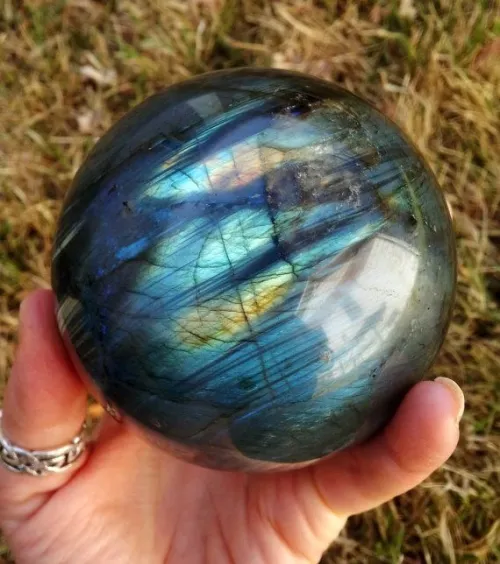
Picture scrolling through jewelry listings late at night when a gemstone video makes you pause: a seemingly plain grey rock transforms into swirling blues and golds with a slight turn. That moment of wonder about its shifting hues—that's how many discover labradorite. This phenomenon isn't magic but precise physics within the stone. But with information overload around gem properties, you might feel overwhelmed trying to grasp what causes this color dance. Like that friend who organizes messy kitchen drawers into clear sections, we’ll break down labradorite’s light-play into practical checkpoints. Use this structured guide as your reference toolkit whether you're choosing a necklace online, examining a vendor’s display, or holding a cabochon up to sunlight.
This checkpoint helps you see why labradorite isn't just another static gem. Recognizing how its structure manipulates light prevents misinterpreting the show as surface treatment—a key insight when evaluating jewelry pieces or natural specimens. You'll spot quality differences others might overlook.
Labradorite's shifting colors originate from its layered architecture. When light enters, it hits alternating crystalline layers causing interference—some wavelengths enhance while others cancel out. This creates flashes that may range from metallic blues to golden oranges depending on the microscopic arrangement. Unlike painted surfaces, this effect occurs from light physics within the material.
What you see depends on the rock's internal blueprint. Thinner layers can produce blue-violet flashes, while thicker ones might reflect gold-orange tones. Locations within the structure cause uneven color distribution patterns known as labradorescence. Crucially, micro-textural variations in the feldspar structure impact luster quality and visual depth—hold specimens near a window to notice how some sections shimmer intensely while others remain muted. Check these variations by rotating your palm slowly: patches with higher lamella density create brighter flashes.
Here we untangle how your position and environment alter perceptions. Knowing these factors prevents frustration when colors seem less vibrant at home than instore—equipping you to demonstrate labradorite’s true potential to friends simply by adjusting lighting.
Your light source dramatically influences the visible spectacle. Direct sunlight typically provides optimal saturation because the full spectrum engages with the mineral structure. When browsing loose stones indoors, try placing them near a window: you'll likely notice richer blues and greens emerge than under LED lights. This variation happens because lower-intensity artificial lighting may fail to activate all wavelength interferences within the layers.
The magic unfolds through movement. Hold a cabochon steady—you might see only grayish base tones. Now rotate it 45 degrees: blue streaks likely flash across its surface. Continue to 90 degrees and gold-green may erupt. This is selective wavelength interference in action. Maximum color visibility typically occurs between 30-120 degrees of angular change relative to your light source. Next time you're in a gem store, test specimens by tilting them under display lights to gauge their responsiveness.
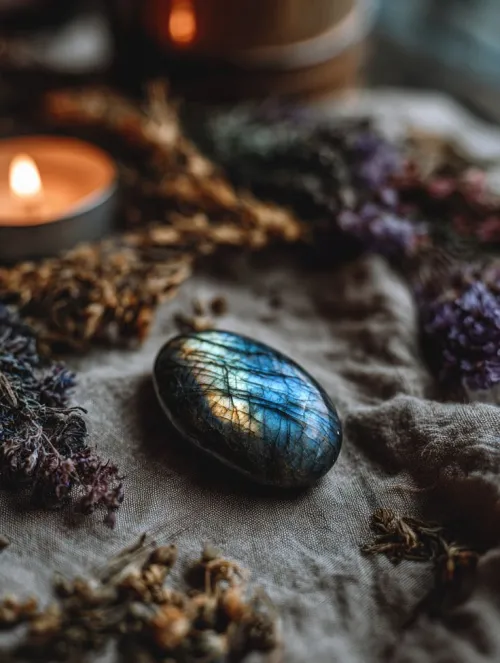
This section helps anticipate durability concerns that affect how the colors appear over years of wear. Understanding preservation avoids damaging reactions during cleaning—knowledge as useful for collectors storing specimens as jewelry owners caring for pendants.
Labradorite remains stable under everyday conditions but requires mindful handling. With hardness rating of 6-6.5 on the Mohs scale, sharp impacts may cause fractures that disrupt light transmission. For cleaning, opt for mild pH-neutral soap solutions instead of ultrasonic cleaners or harsh chemicals. Why? Extended exposure to acidic substances can gradually diminish surface refraction quality—picture dish detergent residue weakening the mirror-like planes inside over years. Store pieces separately from harder gems to prevent abrasive micro-scratches that cloud the reflective surfaces.
Temperature fluctuations below 200°C cause no significant structural changes—your stone won't lose its colors if forgotten near a sunny window. However, long-term UV exposure from display lighting can degrade some mineral components affecting depth perception in flashes. For museum-quality showcases, filtered light is recommended.
These identifiers shield you from imitations. When unethically treated stones flood online markets, recognizing true labradorescence patterns helps distinguish authentic pieces—whether you're examining a $20 raw chunk or $500 artisanal setting.
Genuine labradorite displays an internal glow impossible to fully replicate synthetically. Instead of uniform color coating, authentic specimens show: color zones where flashes appear in isolated patches alongside subdued areas, micro-texture variations altering flash intensity across the surface, and base tones in dark gray to black rather than artificial bright backgrounds. Try the monochromatic background trick: place pieces on white or black paper to better observe structural color versus surface-level effects.
When holding your next stone or pendant, first recall this ultra-compact checklist: Color dance comes from layer interference—changes appear with movement—sunlight performs best—gentle cleaning preserves the show. Let this framework transform everyday interactions. When that jeweler rotates a piece to reveal hidden fireworks, you’ll understand precisely why blue becomes gold. When choosing display locations, you’ll consciously seek window-side brightness to awaken spectral magic. That’s tangible knowledge turning observation into appreciation.
Q: Does cutting style affect color visibility?
A: Absolutely. Faceted cuts can intensify spectral effects through additional refraction planes while cabochons emphasize broader color play. Each showcases different aspects of labradorescence.
Q: Can labradorite colors deepen over time?
A: While the structure remains stable, proper lighting angles and background contrast may make existing colors appear more vibrant as you learn optimal viewing techniques.


$
