Labradorite can briefly contact water during cleaning without immediate damage, but prolonged submersion will gradually weaken its layered structure. Moderate hardness (6-6.5 on Mohs scale) provides limited resistance, requiring specific drying techniques and storage practices to maintain its signature iridescence.
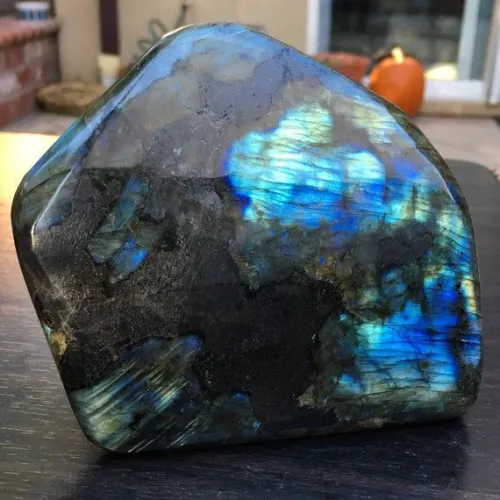
Picture unpacking a new labradorite necklace you've been eyeing for weeks. As you admire its shifting colors, a splash of coffee lands near its chain clasp. Or imagine this scenario: after months of wearing your favorite labradorite ring, its surface starts looking hazy near your hand-washing routines. These ordinary moments make anyone wonder—can this iridescent stone actually handle water? This guide delivers practical insights through an accessible "checkpoint" approach—four foundational angles to assess water risks, each broken into bite-sized scenes you might encounter. Whether you're wiping down jewelry at home or considering cleansing rituals, these tangible reference points cut through confusion efficiently.
Let's demystify why water behaves uniquely around labradorite. Imagine comparing it to household items: granite countertops shrug off spills while untreated wood warps. That contrast echoes what happens here—but why? Your stone's identity hinges on its inner architecture.
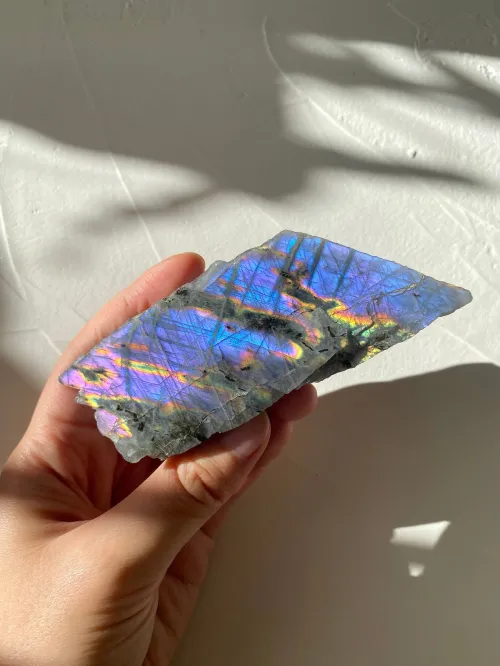
Its iconic iridescence comes from microscopically stacked mineral sheets acting like light-filtering shutters. But those layers develop microscopic gaps—think of imperfectly sealed floorboards during rain. Liquid seeps through slowly, particularly in stones with internal fractures. One jewelry designer shared how this understanding transformed her production: "Previously, I'd dunk pieces to speed-clean them. Now I notice how heavily fractured stones lose luster fastest." This physical reality grounds our care choices.
Envision wearing your labradorite bracelet while gardening—sudden rainfall forces you indoors. Alternatively, consider deliberate water cleansing in spiritual practices. Not all "getting wet" becomes problematic equally.
Minor splashes rarely harm the stone if addressed within minutes—like accidentally caught in drizzle during a walk. Issues emerge during sustained immersion when water penetrates layer gaps. Picture a bath-stored necklace: over months, moisture weakens internal bonds non-uniformly, stressing brittle sections. Industry tests confirm stones under continuous immersion gained negligible weight at first month but developed micro-fractures by third month. Always favor swift drying.
Remember leaving glassware upside-down to drain? Similar principles apply. Tepid air-flow drying (20-25°C/68-77°F)—not heat-intensive methods—prevents thermal shock. Position stones to prevent droplet pooling in crevices for under five minutes exposure.
Visualize opening your jewelry box after beach day: some items look dull despite brief saltwater contact. Rather than generalized "be careful" advice, we'll build tailored habits.
Microfiber cloths outperform cotton swabs by leaving zero lint while absorbing residue. For deeper cleans, pH-neutral solutions (<10% concentration) on cloth-edges prevent oversaturation. Avoid sprays entirely—liquid forced under settings accelerates capillary action. A lapidary expert illustrated this by dripping ink onto untreated stone: "See how quickly spiderweb patterns spread? That's your cleanser invading fractures invisibly."
Preserve luster by addressing two environmental triggers: humidity (store below 60%) and temperature stability (avoiding rapid changes above 50°C/122°F during cleansing). Professional surface treatments like sealants can bridge micro-fractures much like grout seals tiles—especially useful for frequently handled items like rings.
A museum conservator described labradorite damage as "slowly fading rainbows—often noticed too late." Early detection matters most.
Surface cloudiness (etching) under bright light indicates mineral-layer separation—noticeable before deep cracks appear. Tapping stones produces hollower echoes when interior water damage advances. Compare to undamaged pieces' crystalline resonance. Significant weight changes only emerge in long-neglected cases—rely on visual and sound checks first.
Consider bookmarking these three prioritised takeaways: First: water tolerability ties directly to structural integrity—stones with microfractures absorb faster. Second: time matters more than contact frequency—two-minute hand-wash incidents outrank five-minute submersions. Third: post-contact drying requires intentional airflow. Next time you clean labradorite pieces, ask yourself: "Where might moisture hide?" and "Is my method allowing complete evaporation?"
Q: Does saltwater cause additional risks?
A: Salt crystallization can worsen microscopic fractures; freshwater rinses immediately after exposure minimize residue accumulation.
Q: Are certain labradorite colors more vulnerable?
A: Material properties remain consistent across color-zones, though darker specimens may mask early cloudiness better.
Q: How does repeated short exposure compare to prolonged immersion?
A: Multiple brief contacts typically cause minor surface haze that polishing can restore—unlike submersion potentially causing deeper structural fatigue.


$
