Labradorite is a plagioclase feldspar mineral known for its unique schiller effect called labradorescence, formed through slow crystallization in basaltic magma with calcium-rich content ranging 50-70%; it's valued both as gemstone and architectural material with characteristic 6-6.5 Mohs hardness and conchoidal fracture patterns.
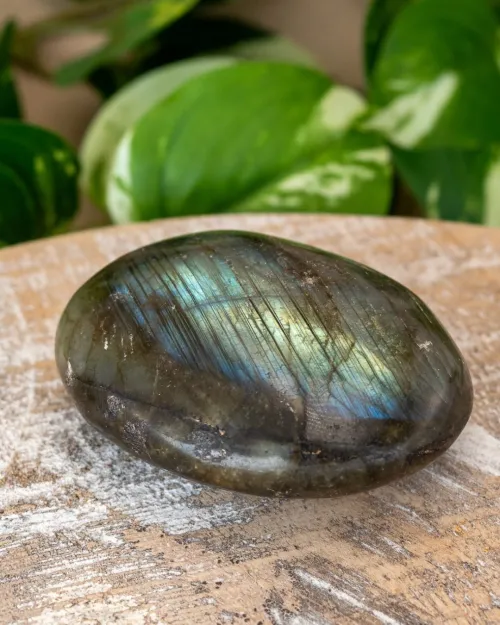
Picture an independent jewelry maker unpacking stone slabs from Finland, momentarily puzzled by flashes of turquoise and gold beneath bubble wrap. Nearby, an architecture student squints at blue flecks in a building facade during golden hour, wondering about the stone's geological history. This isn't some rare gem fantasy – these moments happen daily where science meets everyday life. To navigate labradorite's intricate identity without geology degrees, we break it down through practical checks: core geology facts decoded through real scenarios like material selection or jewelry shopping, each observation revealing why labradorite stands apart.
This section grounds your perception in observable details – whether examining geological samples or jewelry components – helping overcome misleading surface assumptions about composition.
Imagine comparing granite countertop flecks to a pendant's centerpiece; both contain feldspars, but labradorite's layered sodium-calcium aluminum silicate creates distinct physics. These structural layers form within plagioclase sequences under trigonal crystal systems, explaining why skilled lapidaries angle-cut slabs to maximize 86° cleavage planes.
Watch that shop owner explain why customers often confuse rainbow flashes with opal: "Unlike amorphous silica-based gems," they'd say while adjusting overhead lights, "labradorite's color bursts stem from lamellar intergrowths diffracting light." Notice how technicians verify authenticity through cleavage angles and 2.70-2.72 specific gravity measurements, simple tests preventing overpayment for similar-looking stones.
Mastering these visual benchmarks prevents disappointment when purchasing material – from tumbled stones to architectural panels – as lighting conditions dramatically shift perceived quality.
A friend once tilted her ring during brunch sunlight, unleashing cobalt streaks: "The diffraction only happens," she explained, "if parallel lamellas lie within 100-500 nanometers spacing range." This interference layers act as internal prisms scattering white light into visible blues/golds across 360nm-700nm wavelengths when correctly oriented to your eye. Quality grading evaluates both dispersion angles and intensity of this schiller effect.
Consider patio installers reviewing labradorite tiles: UV-resistant coatings become essential, since prolonged sun exposure diminishes iridescence clarity. Material samples undergo thermal stress testing too; structural stability generally persists up to 1200°C, yet heat treatments over 500°C might permanently alter coloration - a crucial factor when selecting long-term jewelry investments.
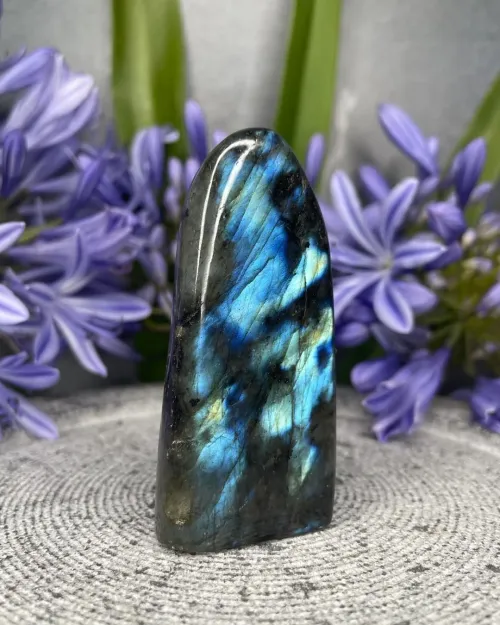
Understanding origins helps anticipate material characteristics; local geology directly influences factors like inclusion levels and thickness needed for optimal light play.
Picture geologists chipping outcrops within Canadian basalt formations where slow magma cooling lets crystals develop signature layers. Major deposits extend beyond Labrador to Finnish quarries and Madagascar fields formed under similar volcanic conditions. When a stone's source location is known, miners predict workability - Ukrainian specimens typically suit intricate carving, while Russian variants withstand thicker slab cutting.
Commercial grading examines fracture density affecting durability: slabs maintained below 3mm thickness optimize light diffusion while requiring more careful handling. Vibration-buffering during cutting minimizes cleavage plane damage; notice how polishers gradually progress through stages to achieve mirror finishes at 80,000-100,000 grit without fracturing the lattice.
Align your expectations with physical realities; labradorite’s moderate hardness creates different considerations for jewelry versus interior applications.
Recall jewelers describing challenges setting iridescent pendants: "Specialized angular cuts maximize that blue flash for engagement settings," they note while demonstrating prong placements avoiding cleavage directions. With 1.5W/m·K thermal conductivity absorbing body warmth, metal bases create insulation to prevent temperature-based microfractures during daily wear.
Construction managers reviewing cladding samples check Mohs hardness relative to building stress points; labradorite's 6-6.5 rating suits vertical installations rather than high-traffic flooring. Watch architects pair stones near structural supports since inclusion tolerance affects longevity in seismic zones - an elegant yet practical solution aligning aesthetics with material realities.
For your mental toolkit: First, identify basaltic-origin specimens with that signature schiller effect showing blues/golds under varied light. Second, assess thickness/transparency trade-offs, remembering optimal slabs stay under 3mm for strong iridescence. Third, verify cleavage planes near 86° angles using simple refractometers in shops – portable tools changing guesswork into confidence. Finally, select applications matching its durable-yet-sensitive nature: stunning jewelry when protected in bezels, dramatic architectural statements in protected installations. Where will you look for those layered flashes next?
Does cutting technique affect the color play?
Specialized angular cutting directs light optimally through internal layers. Different techniques can emphasize certain color frequencies depending on lamella orientation.
How does weathering impact external applications?
Industrial surfacing treatments help maintain integrity against acid rain erosion. UV-protective coatings preserve spectral properties through years of sun exposure.
Are there lab-created alternatives exhibiting similar effects?
Synthetic analogues exist but may show different optical patterns. Natural specimens tend to have minor inclusions and color zoning indicating geological origins.


$
