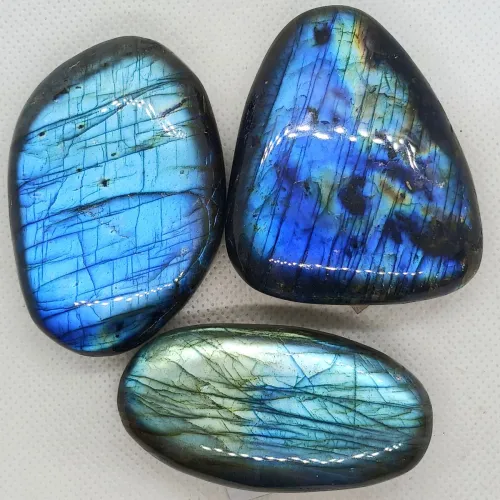
Picture yourself holding a newly unpacked labradorite cabochon ordered online. As sunlight catches its blue-green shimmer, a nagging thought interrupts your excitement: "Is this flash of color truly natural or artificially enhanced?" Many gem enthusiasts face this uncertainty when encountering labradorite – a stone where nature’s artistry often overlaps with human intervention. This guide unpacks the essential verification points in practical, story-driven scenarios. Instead of overwhelming details, you’ll learn through relatable moments: examining a flea market find with friends, testing jewelry under a desk lamp, or watching how light dances across a store display. Each storyline delivers core verification methods, helping you spot natural treasures versus altered specimens confidently.
Distinguishing natural from treated labradorite begins by recognizing inherent traits that resist easy replication. Consider this scenario: during a gathering, friends compare inherited jewelry featuring "mysterious moonstones." One piece flashes a rainbow spectrum, while others show faint blues or flat grays. Such variations highlight material authenticity puzzles. Understanding these core characteristics prevents confusion.
Labradorite’s identity hinges on its geological formation as a feldspar mineral. Picture volcanic magma cooling over centuries – this slow evolution allows the signature "labradorescence" optical effect to emerge naturally through mineral layering. Treated pieces often bypass such natural crystallization timelines. The layered structure integrity affects light refraction properties and visual authenticity – one natural piece may flash rich blues while tilting left, then vanish when turning right. Artificial coloring tends to produce constant or patchy visibility without rhythmic shifts.
A friend once swore their labradorite’s "neon purple flash" proved rare quality. But authentic material tends to display blues, greens, or golds – never electric purples or pinks, which usually signal dye treatments. Natural imperfections can also mislead; some assume inclusion-free equals higher quality. Instead, structural imperfections including natural inclusions differ visibly from artificial filling marks under magnification. Authenticity often shows in these unexpected quirks.
Natural verification starts with your eyes and shifts with angles. Imagine browsing a dimly lit antique booth where a necklace shines unusually bright under display spots. The vendor insists it's "top-grade natural," but your understanding of authentic play-of-color saves the day. Spot inconsistencies using these methods.
Notice how natural iridescence typically shows multicolor flashes that shift smoothly with angle changes – like holding soap bubbles to light. Synthetic material might keep flashes static across angles or concentrate hues unnaturally. Next, scan surface and fracture zones: real specimens show organically flowing color zoning, while treated stones may feature sharp edges between colored/plain sections suggesting dye pooling. Check how light transmission consistency differs across treated versus untreated segments during backlighting – hold a piece toward windows to see whether flashes emerge from inside the stone or float superficially.
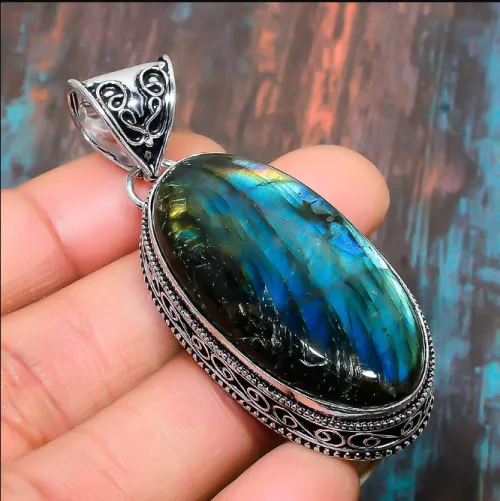
A collector once lamented their labradorite bracelet turning matte after beach vacations. Saltwater had degraded fracture-filling resin invisible at purchase. Surface treatments often create artificial glossiness that lacks depth under magnification. For similar finds, inspect surface texture with a smartphone zoom: epoxy-filled fractures may seem cloudy or plasticky compared to natural irregularities. Watch for suspicious colors: unusually vibrant rainbow flashes not found in natural geological reports can indicate irradiation treatments.
Some discoveries demand simple home science. Picture unwrapping a potential gift at your kitchen counter. Doubts surface about its authenticity, so you run quick tests using household items. These low-tech methods transform uncertainty into confidence.
Start temperature checks: authentic labradorite tends to feel cold against cheeks longer than acrylic fakes – heat dissipates slower through genuine minerals. Then explore density: authentic pieces usually feel heavier than equivalently sized treated alternatives due to weight distribution correlating with natural mineral composition. For moisture interaction tests, place a single water droplet on the surface and time absorption: porous-treated specimens soak liquids within minutes while non-porous natural surfaces maintain beading.
A jeweler’s loupe or smartphone macro lens becomes invaluable when magnified examination at 10x power exposes telltale treatment residues in surface fractures or micro-bubbles. For specialized but accessible tests, acetone spot-checks uncover surface dyes. Swab a hidden area carefully using a cotton bud; colored residue on cotton signals artificial enhancement. Consider weight/volume ratio: using kitchen scales and measuring jugs, calculate specific gravity values – untreated specimens typically range from 2.69 to 2.72.
Understanding labradorite treatments transcends aesthetics – consider a gift-giving situation where two similar pendants carry wildly different price tags. Your grasp of treatment durability and market perspectives reveals worth beyond appearances.
A friend once bought heat-enhanced labradorite thinking treatments boosted durability. However, thermal modifications may create internal stress points, weakening crystalline structures over time. Similarly, fracture-filled pieces become vulnerable to cleaning chemicals or impacts. Long-term color stability varies significantly between naturally formed and dyed units – artificially saturated colors fade faster when exposed to direct sunlight.
Marketplace perception can be confusing: some view treated stones as "reclaimed beauty," while others prefer unaltered material despite its occasional imperfections. Understanding scratch resistance correlating with Mohs hardness values between 6 and 6.5 helps evaluate durability scenarios. A naturally sturdy piece may survive decades of daily wear while stabilized alternatives require delicate handling.
When future labradorite encounters happen – perhaps at craft fairs or online browsing – anchor yourself to this mental checklist:
1. Observe the flash choreography: Natural color transitions resemble slow dancing versus abrupt costume changes. 2. Check for manufactured perfection: Genuine stones embrace organic "imperfections" like fingerprints of authenticity. 3. Consider long-term performance: Think of treatments as temporary stage makeup rather than foundational strength.
Picture handling that next potential gemstone buy: instead of hesitation, you pause to notice surface transitions and imagine decades of use. This intentional observation can become your most reliable verification partner.
Q: Can treated labradorite pass as natural to untrained eyes?
A: Some treatments create convincing illusions initially, but magnification or lighting tests often reveal artificial traits like unnaturally uniform fractures or surface residues.
Q: Do natural imperfections lower labradorite’s value?
A: Unlike diamonds, natural character marks don't necessarily reduce worth in the colored gemstone market – they frequently serve as authenticity indicators.
Q: How can I test without professional tools?
A: Everyday tools create verification possibilities: smartphones function as microscopes, water droplets reveal absorption rates, and directional lighting exposes color-play behaviors.


$
