You feel it, right? That moment you pick up your favorite labradorite pendant after a long week. The flash seems dimmer, the stone feels heavier—not in your hand, but in your perception. The instinct whispers: “It needs cleansing.”
Here’s the radical truth we need to address first: The stone hasn’t changed. Your relationship with it has.
Discussions about “cleansing labradorite” are almost always clouded by vague mysticism, missing the tangible, beautiful science of the stone itself and the practical psychology of ownership. Let’s strip that away. This isn’t about believing or not believing; it’s about understanding what you’re actually maintaining, and choosing actions that have real effects—on the mineral and on you.
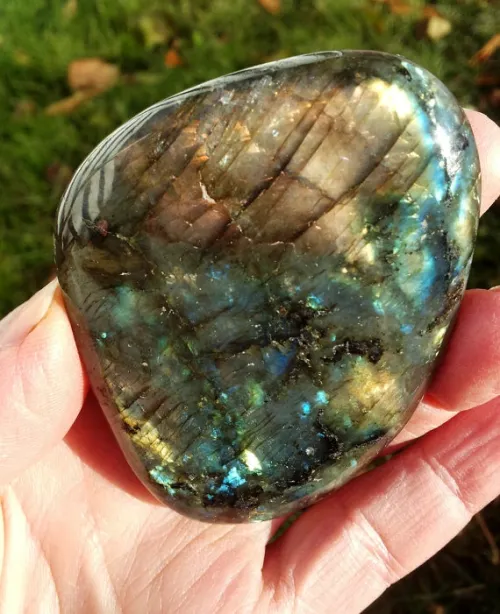
“Labradorite’s magic isn’t that it absorbs ‘energy.’ Its magic is a quantum-level optical trick called labradorescence. Cleansing, then, is either physical care for that phenomenon, or a ritual to reset your own attention.”

The flash is light trapped between microscopic layers of feldspar. Your goal is to keep that stage clear.
Separate the intent to understand the action. You’re likely trying to solve one of two problems:
| Reason for Cleansing | The Actual Target | The Effective Solution | The Ineffective (But Popular) Fix |
|---|---|---|---|
| 1. Physical Residue & Dullness | The stone’s surface. Body oils, dust, lotion, and environmental grime that settle on the crystal, acting like a film on a lens and dimming the labradorescence. | Gentle, physical cleaning. Warm water, mild soap, a soft cloth. Drying thoroughly. This is direct maintenance of the optical effect. | Smudging, sound baths, moonlight. These do nothing to remove physical oil and dust. They are symbolic, not functional, for this problem. |
| 2. Psychological & Associative Reset | Your own mind. The stone becomes a repository for memories, emotional weight, or simply familiarity’s blindness. The “reset” is for your perception, to restore its specialness and your attentive bond. | Any intentional ritual. Smudging, moonlight, breath, sound, focused intention. The act itself is the cleanse, breaking your automatic association and renewing its significance. | Assuming a “dirty” stone is the cause of your own fatigue or mood. The stone is a mirror, not a battery. |
Most frustration comes from using a Type 2 solution (a ritual) for a Type 1 problem (dirty stone), then wondering why the flash didn’t return. Know your target.
A singing bowl creates a sensory ritual. It clears your mental space, which can change how you see the stone.
Labradorite is a feldspar mineral with a hardness of 6-6.5. It’s not overly delicate, but it’s softer than quartz. Its kryptonite is sudden temperature change and harsh chemicals, which can damage the internal structure or polish. Here’s your physical maintenance plan:
If your goal is to renew your connection to the stone, any deliberate act works. The key is intention and sensory engagement. Choose one that fits your style:
The rule: Do it mindfully, not mechanically. The power is in your focused attention, not in the method.
Stop guessing. Follow this logic:
Caring for labradorite—or any cherished object—is an act of respect. The “cleansing” ritual, whether physical or symbolic, is a dialogue between you and a piece of the Earth that catches light in a way that stops your heart.
Forget dogma. Use the physical clean to preserve the geological miracle. Use the ritual reset to preserve the personal magic. When you understand which is which, you move from superstition to skillful care, and your labradorite will shine—both in your hand and in your imagination—for a very long time.


$
